
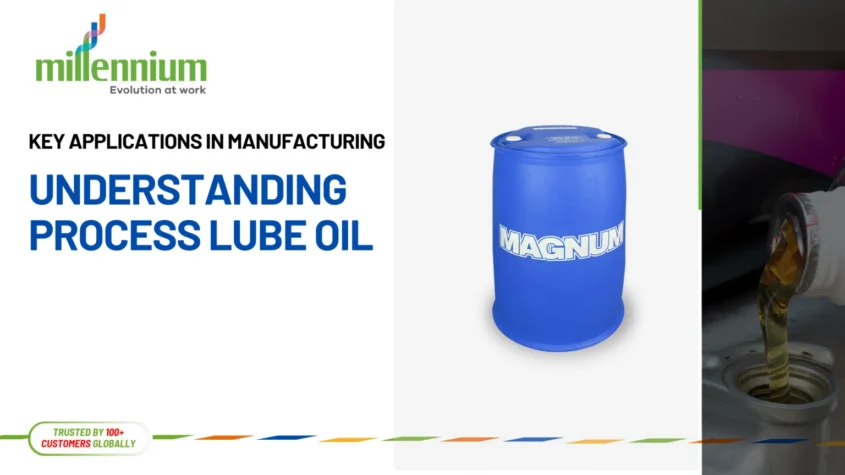
Behind every smooth-running manufacturing process lies a combination of precise machinery, skilled operation, and the right industrial fluids. One such fluid that quietly supports efficiency and product quality across multiple industries is Process Lube Oil (PLO). While it may not always receive the same attention as hydraulic or engine oils, process lube oil plays a crucial role in shaping materials, improving process stability, and enhancing final product performance. Its importance becomes especially clear in industries where consistency, purity, and controlled processing are essential.
So, What Is Process Lube Oil?
Process lube oil is a special-purpose industrial oil designed to assist directly in manufacturing processes rather than simply lubricating machine components. It is typically made from highly refined mineral base oils or carefully engineered formulations that are stable, clean, and compatible with a wide range of raw materials.
Unlike general lubricants, process lube oil is often intended to come into contact with products during manufacturing. Because of this, it is produced with controlled composition, low impurity levels, and predictable physical properties. Depending on the application, it may function as a softener, flow improver, processing aid, or blending medium, making it an integral part of production rather than a background support fluid.
Why It Works
Process lube oil is effective because it is engineered for stability, compatibility, and consistency. Its performance advantages include:
Controlled viscosity, ensuring uniform behavior during mixing, extrusion, or molding
Thermal reliability, allowing it to perform under elevated processing temperatures
Chemical inertness, preventing unwanted reactions with polymers, rubbers, or additives
Low volatility, helping maintain material balance and product consistency
These properties allow manufacturers to fine-tune their processes, reduce defects, and achieve repeatable results batch after batch.
Where It’s Used
The versatility of process lube oil makes it valuable across a wide range of manufacturing sectors. Its role adapts based on the material being processed and the desired outcome.
Rubber Manufacturing
In rubber processing, process lube oil is widely used to improve compound flexibility and processability. It helps soften rubber mixes, making them easier to handle during milling, mixing, and extrusion. By reducing internal resistance, PLO allows fillers and additives to disperse more evenly throughout the compound.
This results in smoother processing, lower energy consumption, and improved physical properties in finished products such as tires, seals, belts, and molded rubber components. Properly selected process lube oil can also influence hardness, elasticity, and surface quality.
Plastics & Polymers
In plastics and polymer manufacturing, process lube oil acts as a flow enhancer and processing stabilizer. It supports smoother melt flow during extrusion and molding, helping manufacturers achieve better surface finish and dimensional accuracy.
PLO is particularly useful in applications involving PVC and specialty polymers, where controlled flexibility and reduced brittleness are required. By improving process efficiency, it allows lower operating pressures and temperatures, which helps extend equipment life and reduce energy usage.
Textiles
The textile industry relies on process lube oil to reduce friction and protect fibers during high-speed production. During spinning, weaving, and knitting, PLO minimizes yarn breakage and helps maintain consistent tension.
It also assists in controlling static electricity and improving fiber alignment, leading to smoother fabrics and fewer defects. Because of its clean and stable nature, process lube oil can be easily removed during finishing without leaving stains or residues, making it suitable for both natural and synthetic fibers.
Chemical Production
In chemical manufacturing, process lube oil is commonly used as a carrier fluid or processing medium. Its stable composition allows it to support controlled reactions and consistent blending of additives and compounds.
PLO is frequently used in the production of coatings, adhesives, sealants, and specialty formulations where viscosity control and purity are critical. Its compatibility with various chemical systems makes it a dependable choice for complex production environments.
Other Cool Uses
Beyond traditional manufacturing sectors, process lube oil finds application in several additional areas, including:
Mold release and surface treatment operations
Processing of construction materials and composites
Specialized industrial formulations
Approved-grade applications in cosmetics and personal care manufacturing
These diverse uses highlight how adaptable process lube oil is across modern industry.
Why MAGNUM PLO Deserves a Shoutout
MAGNUM Process Lube Oil (PLO) is designed to meet the exacting demands of today’s manufacturing environments. Produced using carefully selected base oils and advanced refining processes, it delivers consistent performance across a wide range of applications.
Key strengths of MAGNUM PLO include:
Reliable viscosity stability for predictable processing
Low impurity and aromatic content for cleaner operations
Strong resistance to thermal and oxidative breakdown
Excellent compatibility with rubber, polymers, and chemical formulations
These qualities help manufacturers improve process control, reduce rework, and maintain high product standards.
How to Store, Handle, and Blend Like a Pro
To maintain the quality of process lube oil, proper management is essential:
Store oil in sealed, clean containers to prevent contamination
Keep storage areas dry and away from excessive heat
Use dedicated transfer equipment to avoid cross-contamination
Follow recommended blending procedures and ratios
Inspect oil condition regularly before use
Good handling practices ensure consistent performance and long service life.
Final Take
Process lube oil is a behind-the-scenes powerhouse in manufacturing, supporting efficiency, consistency, and product quality across multiple industries. From rubber and plastics to textiles and chemicals, its role extends far beyond simple lubrication. With high-quality solutions like MAGNUM PLO and disciplined handling practices, manufacturers can optimize their processes, reduce downtime, and deliver reliable, high-performance products in an increasingly competitive market.
Understanding Process Lube Oil: Key Applications in Manufacturing
What Makes a Good IVF Clinic in Bangalore? Key Factors to Know
Choosing the right IVF clinic is one of the most important decisions for couples strugglin…
Politics
Most Popular
Why ABQ Realtors Are Seeing High Demand in the Metro Area
The Albuquerque metro area has experienced a noticeable surge in housing activity over the …