


Passing a driving test requires more than basic vehicle control. Many learners fail due to repeated, avoidable errors rather than a lack of knowledge. App-based practice has become a structured way to address these issues through consistent revision, hazard awareness, and rule clarity. Digital learning allows learners to practise at their own pace while reinforcing correct decision-making. By focusing on common problem areas, app-based preparation helps improve confidence, judgement, and test readiness. This article explains the most frequent driving test mistakes learners make and how structured mobile practice supports improvement without pressure, confusion, or unnecessary repetition during preparation.

Why Learners Commonly Fail Driving Tests
Driving tests are designed to assess consistency, judgement, and safety rather than perfection. However, many learners approach the test without fully addressing their weakest areas. A lack of structured revision often results in repeated mistakes that examiners notice quickly. Learners may understand the basics of driving yet struggle with applying rules under pressure.
Another contributing factor is inconsistent practice. When preparation depends solely on occasional lessons, gaps in knowledge remain unaddressed. Learners may remember information incorrectly or fail to revise essential rules regularly. This creates confusion during the test, particularly in unfamiliar situations.
Mental pressure also plays a role. Without repeated exposure to test-style scenarios, learners may rush decisions or hesitate unnecessarily. App-based preparation reduces this risk by offering consistent exposure to rules, scenarios, and structured practice. When learners understand expectations clearly, they are more likely to remain calm and focused throughout the assessment.
Control and Vehicle Handling Errors
Vehicle control issues are among the most common reasons learners lose marks. These mistakes often appear minor but indicate a lack of confidence or coordination. App-based practice reinforces correct techniques by combining rule knowledge with situational awareness.
Common Control Errors Include
- Inconsistent clutch control during slow manoeuvres
- Harsh braking or delayed braking response
- Steering corrections made too late
- Difficulty maintaining safe road positioning
These issues usually arise when learners focus too much on one aspect of driving and neglect others. Digital practice tools support balanced preparation by reinforcing correct responses before practical application.
How Structured Practice Helps
App-based modules often include scenario-based questions that focus on timing, judgement, and reaction. This improves mental coordination, allowing learners to respond more smoothly during practical driving. When learners understand what is expected in specific situations, vehicle control becomes more instinctive.
Repeated exposure to controlled scenarios also reduces hesitation. Learners begin to anticipate required actions rather than reacting too late. Over time, this creates smoother driving patterns and better examiner confidence.
Observation and Awareness Mistakes
Poor observation is a major cause of driving test failure. Examiners closely monitor how well learners check mirrors, assess surroundings, and respond to hazards. Even when vehicle control is adequate, weak observation leads to unsafe decisions.
Typical Awareness Errors
- Failing to check mirrors before changing speed or direction
- Late responses to developing hazards
- Weak judgment at junctions
- Incomplete visual scanning
These mistakes often result from rushed preparation or limited understanding of examiner expectations. Learners may know mirror routines but forget to apply them consistently under pressure.
Benefits of Digital Awareness Training
App-based practice reinforces observation habits through repeated questioning and scenario evaluation. Learners become more familiar with identifying risks before they escalate. This improves reaction timing and reduces last-minute decision-making.
By practising hazard recognition digitally, learners train their attention to focus on relevant cues. This mental preparation supports safer real-world driving and improves overall test performance.
Road Rules and Sign Misunderstanding
Misinterpreting road rules is another frequent reason for test failure. Learners may memorise rules initially but forget details without regular revision. Road markings, priority rules, and signal meanings require consistent reinforcement.
Common Rule-Based Errors
- Incorrect response at priority junctions
- Misunderstanding road markings
- Late reaction to traffic signals
- Incorrect lane discipline
These mistakes suggest gaps in rule retention rather than driving ability. Without structured revision, learners may rely on guesswork during the test.
How App-Based Revision Supports Accuracy
Digital learning allows learners to revise rules repeatedly without time pressure. Question-based formats highlight incorrect assumptions and reinforce correct understanding. Visual explanations also support clearer retention of markings and signage.
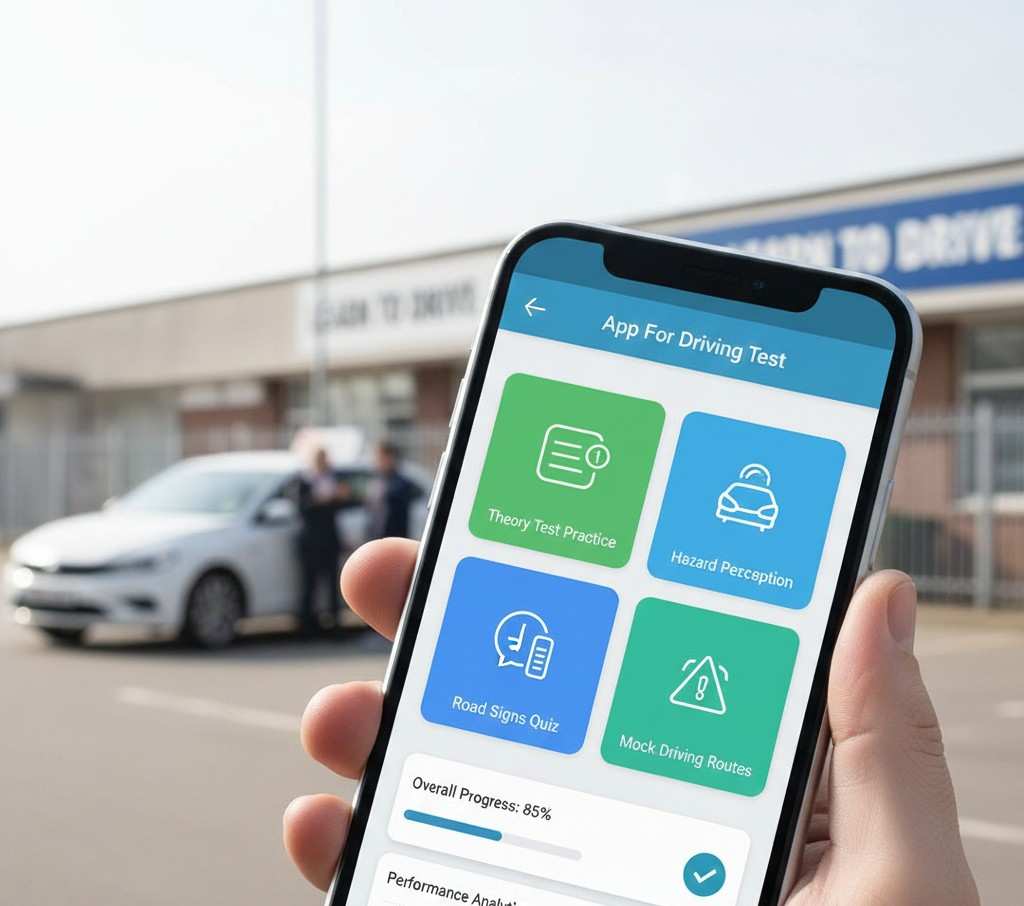
The structured nature of an app for driving test ensures learners revisit key rules until understanding becomes consistent. This reduces confusion and improves compliance during the practical assessment.
How App-Based Practice Improves Test Performance
Consistent digital practice offers several advantages over irregular revision. Learners gain access to structured content designed to mirror test expectations. This creates familiarity, confidence, and improved judgement.
Key Advantages of App-Based Preparation
- Flexible revision schedules
- Immediate feedback on mistakes
- Clear explanation of rules
- Gradual confidence building
Apps also support self-assessment. Learners can identify weak areas early and focus their attention accordingly. This targeted preparation reduces unnecessary repetition and improves efficiency.
Digital platforms encourage accountability. Regular engagement builds discipline, ensuring learners remain focused throughout their preparation period. As confidence improves, test anxiety reduces naturally.
When combined with practical driving experience, app-based learning creates a balanced preparation strategy. Learners approach the test with clarity rather than uncertainty.
Conclusion
Avoidable mistakes remain the main reason learners struggle during driving tests. Issues related to observation, control, and rule interpretation often result from inconsistent preparation rather than lack of ability. Structured digital practice offers a reliable way to address these weaknesses through repetition, clarity, and confidence building. By reinforcing correct habits and improving awareness, app-based preparation supports safer decision-making under test conditions. Learners who prepare systematically are more likely to remain calm, focused, and compliant throughout the assessment. Using a reliable App for Driving Test provides structured support, making preparation more efficient and outcome-focused.

What Makes a Good IVF Clinic in Bangalore? Key Factors to Know
Choosing the right IVF clinic is one of the most important decisions for couples strugglin…

Why ABQ Realtors Are Seeing High Demand in the Metro Area
The Albuquerque metro area has experienced a noticeable surge in housing activity over the …