


The external areas determine the feeling of locations even after the sun goes down. Lighting determines visibility, safety and beauty in landscapes. When used properly, outdoor lighting prolongs the use and increases design unity. The contemporary buildings are dependent on ordered lighting to produce well-furnished spaces that are comfortable to live in during the night. The solution promotes the experience of comfort, clarity and uniformity of outdoor experiences of all people present.
A landscape lighting installation by a professional enables the proper regulation of brightness, direction and focal point of visual consideration outdoors. It favors the design, landscapes gardens, and walkways and does not overwhelm nature. Aesthetics or performance in long-term planning is in tandem using placement logic and environmental sensitivity. Consequently, the outdoor environments become harmonious, interactive and functional during the evening hours to use daily and the best places to have memorable night lives across the premises.
Landscape Lighting Installation Process in Outdoor Design
Installation of landscape lighting starts with the knowledge of the outdoor design and the use of the landscape. In both spaces, there are various challenges pertaining to the terrain, vegetation and buildings. Proper planning would see that the lighting complements the environment and does not take competition with it.
Outdoor lighting design is concerned with moderation. Light should be used to reveal features without causing glare or over contrast. Professional planning will also ensure that both movement and visual clarity of the outdoor areas will be provided through illumination.
Outdoor Lighting Planning for Different Landscapes
Planning begins with a site analysis that takes into consideration the ground levels, vegetation and other manmade structures. Sloping landscapes also need regulated beam angles to prevent the disproportionate brightness. Flat gardens require light stratification to allow the avoidance of visual flatness.
The illumination is also based on seasonal variations. There is development of trees, shrubs and pathways. Long term planning makes lighting to be effective as the landscape grows.
Impact of Lighting Placement on Visual Balance
The perception of the outdoor elements in the night is how lighting is placed. Directional lighting is more attractive as it produces depth while improper angles are harsh producing shadows. Equal spacing is comfortable to the eyes.
There should not be light overlap to avoid washed-out areas. Regulated lighting gets the focal points with maintaining darker areas. This ratio enhances general outdoors mood.
Impact of Landscape Lighting Installation on Outdoor Appearance
The perception of the outdoor elements in the night is how lighting is placed. Directional lighting is more attractive as it produces depth while improper angles are harsh producing shadows. Equal spacing is comfortable to the eyes.
There should not be light overlap to avoid washed-out areas. Regulated lighting gets the focal points with maintaining darker areas. This ratio enhances general outdoors mood.
Role of Lighting in Highlighting Landscape Features
Everything is focused on lighting, which attracts both natural and architectural features. Trees, water features and stone elements become deeper with selective lighting. Darkness provides contrast and visual effect.
Accent lighting focuses attention on the points of focus without being overwhelming. Such a style produces picturesque layers that are deliberate and sophisticated
Enhancement of Curb Appeal at Night Through Lighting
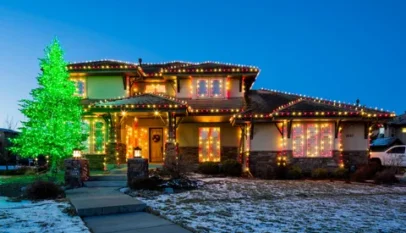
The initial impressions usually take place at night. It is lighting that determines the appearance of properties in the street. Lighting improves the frontages and walks. Bright interiors are a sign of thought and order. This solution enhances aesthetic value of property and aesthetics.
Role of Landscape Lighting Installation in Outdoor Safety
One of the major reasons why people use outdoor lighting is safety. The visibility minimizes the risks of contributing to uneven surfaces and low light conditions. Considerable use of lights encourages safe movement in the outdoor territories.
Adequate lighting is also a deterrent to undesirable activity. Bounded locations and perceptible space bring the feeling of security.
Lighting Used to Improve Visibility Around Properties
One of the major reasons why people use outdoor lighting is safety. The visibility minimizes the risks of contributing to uneven surfaces and low light conditions. Considerable use of lights encourages safe movement in the outdoor territories.
Adequate lighting is also a deterrent to undesirable activity. Bounded locations and perceptible space bring the feeling of security.
Proper Lighting Used to Support Property Security
Lighting is a visual deterrent in eliminating dark areas. Good vision enhances security within the premises. Location helps in the view of surveillance. Clearly delineated areas of lights demarcate property. Such transparency leads to a safer outdoor space.
Use of Different Types of Landscape Lighting
Various types of lighting are used in different outdoor purposes. Both types will add to usability, safety, and visual attractiveness. The combination of these factors forms a unified lighting system.
The choice of lightings is based on the purpose of the space and design objectives. Careful use of design brings in functionality and not visual noise.
Pathway Lighting Used to Guide Movement
Pathway lighting is used to offer direction on outdoor paths. Equal spacing enhances navigation and lessens shadows. This lighting aids in terms of safety and beauty.
Minimization of glare through low profile fixtures. They melt with the scenery still remaining visible.
Accent Lighting for Added Depth and Visual Focus
There is emphasis on certain landscape features through the use of accent lighting. There is an emphasis on trees, sculptures and detailing of architecture. Contrast and visual hierarchy are achieved through the use of focused beams. Light intensity is regulated to eliminate over-illumination. This reserve adds richness without overpowering the environment.
Ambient Lighting Used to Create Outdoor Atmosphere
Ambient lighting determines the intensity of brightness. Soft lighting is advantageous in patios and seating places. The lighting helps in comfort and long usage. Even ambient lighting does not create severe contrasts. Outdoor areas are comfortable and practical.
Landscape Lighting Installation Adapted to Different Property Types
Dissimilar properties have dissimilar lighting solutions. There are residential and commercial functional priorities. Flexibility will guarantee that lighting is specific.
Lighting plans are scalable across property scales due to design flexibilities. This method guarantees the uniformity of results.
Lighting Design for Residential Properties
Home lighting emphasizes on comfort and usability. Gardens, drive ways and outdoors living areas should be illuminated equally. Lighting aids every day and aesthetic delight.
Outdoor and indoor design is linked through design consistency. This integration promotes holistic property.
Use of Landscape Lighting in Commercial Outdoor Spaces
Business zones are the ones that focus on visibility and security. Passages, metals and lighting entrances need good lighting. The lighting promotes direction and professionalism.
The determination of the choice of the features (durability and performance) is the determinant of the choice of the feature. The lighting should be able to handle the exposure to the environment and its frequent usage.
Correct Planning of Landscape Lighting Installation
Lighting will work as it should do, through great planning. Design decisions are affected by environmental conditions and energy considerations. It is better to plan in advance to avoid future adaptability.
An effective installation of landscape lightning provides a balance between the aesthetic and long-term performance. Planning guarantees visual and reliability.
Environmental Factors Influencing Lighting Choices
Exposure to weather influences the longevity of fixtures. Rain, shifts in temperature and wind demand tough materials. Placement should take into consideration the natural light interaction.
Lighting life is enhanced by environmental awareness. The right planning minimizes the maintenance requirements.
Energy Efficiency in Lighting Design
Outdoor lighting is supported by energy-efficient systems. LED technology will save power, and the brightness will not be compromised. This method encourages the use in the long run.
Outdoor landscape lighting Canada is usually of a high efficiency in regions such as Canada because of weather reasons. Energy planning guarantees that there is no performance hitches throughout the year.
Landscape Lighting Installation for an Improved Outdoor Experience
Lighting increases the uses of outdoor space. With appropriate lighting, evening activities are made available. This redesign adds to usefulness.
Emotional reaction to outside landscapes is also influenced by lighting. A balanced construction brings in comfort and aesthetics.
Lighting That Extends Outdoor Usability
Light rooms are conversational even during the night. Evening use is supported by patios, gardens and walkways. Outdoor interaction is promoted by the lighting.
Brightness is maintained thus enhancing comfort. Space does not seem restrictive but usable.
Conclusion
A professionally installed landscape lighting system creates visually balanced and appealing outdoor spaces through precise placement, efficient energy planning, and environmental awareness. This thoughtful approach shapes how outdoor areas are perceived and remembered after sunset while improving usability and visual harmony. A well-executed landscape lighting installation transforms exterior spaces into functional and atmospheric extensions of the home.
FAQS
What is landscape lightning installation used for?
Landscape lightning installation is used to improve outdoor visibility and safety. It also enhances the visual appearance of landscapes after sunset.
How does landscape lighting improve outdoor spaces?
Lighting highlights pathways, plants, and architectural features. It creates balance and makes outdoor areas usable during evening hours.
Is landscape lightning installation suitable for all properties?
Yes, it can be adapted for residential and commercial properties. Lighting plans are adjusted based on layout and usage needs.
Does outdoor lighting affect energy efficiency?
Modern lighting systems are designed for efficiency and durability. Proper planning reduces energy use while maintaining consistent illumination.
What Makes a Good IVF Clinic in Bangalore? Key Factors to Know
Choosing the right IVF clinic is one of the most important decisions for couples strugglin…

Why ABQ Realtors Are Seeing High Demand in the Metro Area
The Albuquerque metro area has experienced a noticeable surge in housing activity over the …