

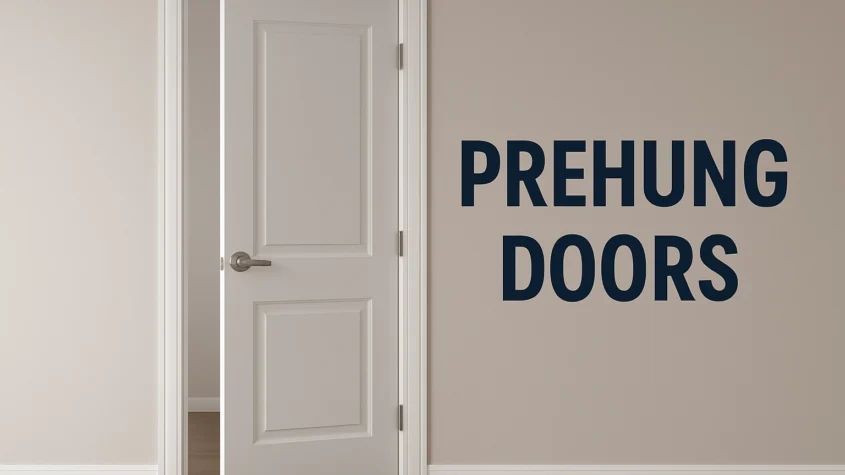
In the world of home renovation and construction, few elements are as fundamentally important—and yet as often overlooked—as doors. They are the silent facilitators of our daily routines, providing privacy, security, sound insulation, and aesthetic character. For Canadian homeowners, builders, and renovators navigating a market defined by extreme weather, a focus on energy efficiency, and diverse architectural styles, the choice of door installation method is critical. Enter the prehung door: a modern solution that is steadily becoming the standard for new builds and renovations alike across Canada. This comprehensive guide explores why prehung doors are a smart, efficient, and reliable choice for the Canadian market.
What Exactly is a Prehung Door?
First, let’s demystify the term. Unlike a traditional “slab door” (a single, flat panel without any hardware), a prehung door is a complete system. It arrives from the manufacturer or supplier as a fully assembled unit, comprising:
-
The Door Slab: The actual door itself.
-
The Frame (or Jamb): The three-sided structure (two side jambs and a head jamb) that holds the door.
-
The Hinges: Already mortised (precisely cut) into both the door and the frame, with the hinge pins in place.
-
The Door Stop: The trim mounted inside the frame against which the door closes for a perfect seal.
In many cases, especially for exterior models, the unit also includes a pre-cut hole for the lockset and is paired with a threshold and weather stripping designed for optimal energy performance. Essentially, it’s a door that’s ready to be installed into a rough opening in your wall, bypassing the most complex, time-consuming, and error-prone steps of traditional door hanging.
Why Prehung Doors are Gaining Popularity in Canada
The Canadian construction landscape presents unique challenges that make the advantages of prehung doors particularly compelling.
1. Superior Energy Efficiency and Weather Sealing
Canada’s climate is unforgiving, with winters bringing deep freezes, driving snow, and fierce winds from coast to coast. A door’s primary job is to be a barrier against the elements. Prehung exterior doors are engineered for this task. They come with integrated, high-quality weather stripping systems and are paired with adjustable thresholds. This creates a continuous, tight seal that is incredibly difficult to achieve with a slab door installed into a site-built frame. For energy-conscious Canadians looking to reduce heating bills (a significant household expense) and improve home comfort, a properly installed prehung doors is a clear winner. It’s a key component in building to the ENERGY STAR® standards that are prevalent in Canadian building codes.
2. Unmatched Ease and Speed of Installation
Finding skilled labour is a constant challenge in the booming Canadian renovation and construction sectors. The precision required to mortise hinges, align a door slab perfectly within a custom-built frame, and ensure it swings freely without binding is a specialized skill. Prehung doors democratize quality installation. By moving the precision work from the job site to the controlled environment of a factory, they significantly reduce the margin for error. For a contractor, this means faster turnaround times and predictable labour costs. For the avid DIY homeowner, often spurred by popular renovation shows and a desire to add value, installing a prehung interior door is a manageable weekend project with professional-looking results.
3. Consistent Quality and a Perfect Fit
Factory manufacturing ensures a level of consistency that is hard to match on-site. The hinges are machine-mortised to exact depths, the frame is square, and the door is aligned perfectly within it. This eliminates common post-installation problems like sticking, swinging open or closed on its own, or uneven gaps around the edges. In a country where homes settle with the freeze-thaw cycles, starting with a perfectly square and true unit is a major advantage.
4. Aesthetics and Finish Options
The Canadian market offers a vast array of prehung door styles to suit every home, from classic Victorian and Craftsman designs found in Toronto’s older neighbourhoods to the sleek, modern styles favoured in Vancouver’s new condos, to the rustic, solid wood doors perfect for a cottage in Muskoka or the Rockies. They are available in a variety of materials:
-
Fibreglass: Extremely popular for exteriors in Canada due to its exceptional insulation properties, durability, and resistance to dents, warping, and harsh weather.
-
Steel: A cost-effective, secure, and energy-efficient option for exterior doors, often with a polyurethane foam core for insulation.
-
Solid Wood & Engineered Wood: Preferred for interior applications and certain exterior styles where natural beauty is paramount. Modern engineered wood cores provide stability against humidity changes.
-
Aluminum/Glass: Common in contemporary designs and patio door systems.
Many prehung doors come pre-primed and ready for paint, or with a factory-applied stain and finish that is more durable and even than what can be achieved on-site.
Considerations for the Canadian Buyer
While the benefits are substantial, selecting a prehung door requires careful consideration:
-
Rough Opening Size: This is the most critical measurement. You must know the exact width and height of the structural opening in your wall before ordering. Standard sizes exist (e.g., 30″, 32″, 36″ for widths), but older Canadian homes, especially, may have non-standard openings.
-
Handing (Swing Direction): Determine if the door is left-handed or right-handed, and whether it swings inward or outward. Exterior doors in Canada typically swing inward, which is safer during heavy snow accumulation.
-
Building Codes: Ensure the door, especially an exterior one, meets local building codes for egress, safety, and energy standards. Fire-rated prehung doors are required for certain rooms like garages entering the house.
-
Professional vs. DIY: While interior prehungs are DIY-friendly, installing a heavy, expensive exterior prehung door—especially one that must be perfectly flashed and sealed against water infiltration—is often best left to professionals. The cost of a botched weather seal far outweighs the installation fee.
-
Budget: Prehung doors have a higher upfront material cost than slab doors. However, when you factor in the significantly reduced labour cost and time, the total project cost is often competitive, if not lower. The long-term value in energy savings, durability, and aesthetics is a key part of the calculation.
The Verdict: A Door Built for Canadian Living
The trend toward prehung doors in Canada is more than just a convenience; it’s a response to the demands of modern building science and homeowner expectations. They represent a fusion of quality, efficiency, and performance that aligns perfectly with national priorities: building durable, energy-efficient homes that can withstand a challenging climate without sacrificing style or comfort.
Whether you’re a builder streamlining a new subdivision project in Calgary, a renovator updating a century home in Halifax, or a homeowner in Montreal tackling a basement suite renovation, the prehung door offers a reliable, high-performance solution. It takes a critical component of the home out of the realm of potential problems and places it firmly in the category of solved, sealed, and stylish. In the end, choosing a prehung door isn’t just about installing a door; it’s about investing in the integrity, efficiency, and beauty of the Canadian home.
What Makes a Good IVF Clinic in Bangalore? Key Factors to Know
Choosing the right IVF clinic is one of the most important decisions for couples strugglin…

Why ABQ Realtors Are Seeing High Demand in the Metro Area
The Albuquerque metro area has experienced a noticeable surge in housing activity over the …